Zoological illustrations created in a range of mediums including graphite, watercolor, and colored pencil.

Perched
Abert’s squirrel & pine white butterflies on ponderosa pine.
The Abert’s squirrel (Sciurus aberti) relies on ponderosa pine (Pinus ponderosa) for shelter and food, building its nest within the tree, and eating almost every part the tree has to offer, including seeds from the pine cones, inner bark, buds, and pollen cones.
Pine white butterflies (Neophasia menapia) use ponderosa pine as their preferred host plant, meaning the butterflies lay their eggs on the pine needles, and once hatched, the larvae eat the needles.
Graphite
17.5” x 22.5”

Harvest Mice on Blue Grama Grass
An illustration of the three species of harvest mice that are found in New Mexico; (from left to right/ top to bottom) plains harvest mouse (Reithrodontomys montanus), western harvest mouse (Reithrodontomys megalotis), and fulvous harvest mouse (Reithrodontomys fulvescens), on the state grass of New Mexico - blue grama grass (Bouteloua gracilis).
Graphite
13.75” x 17”
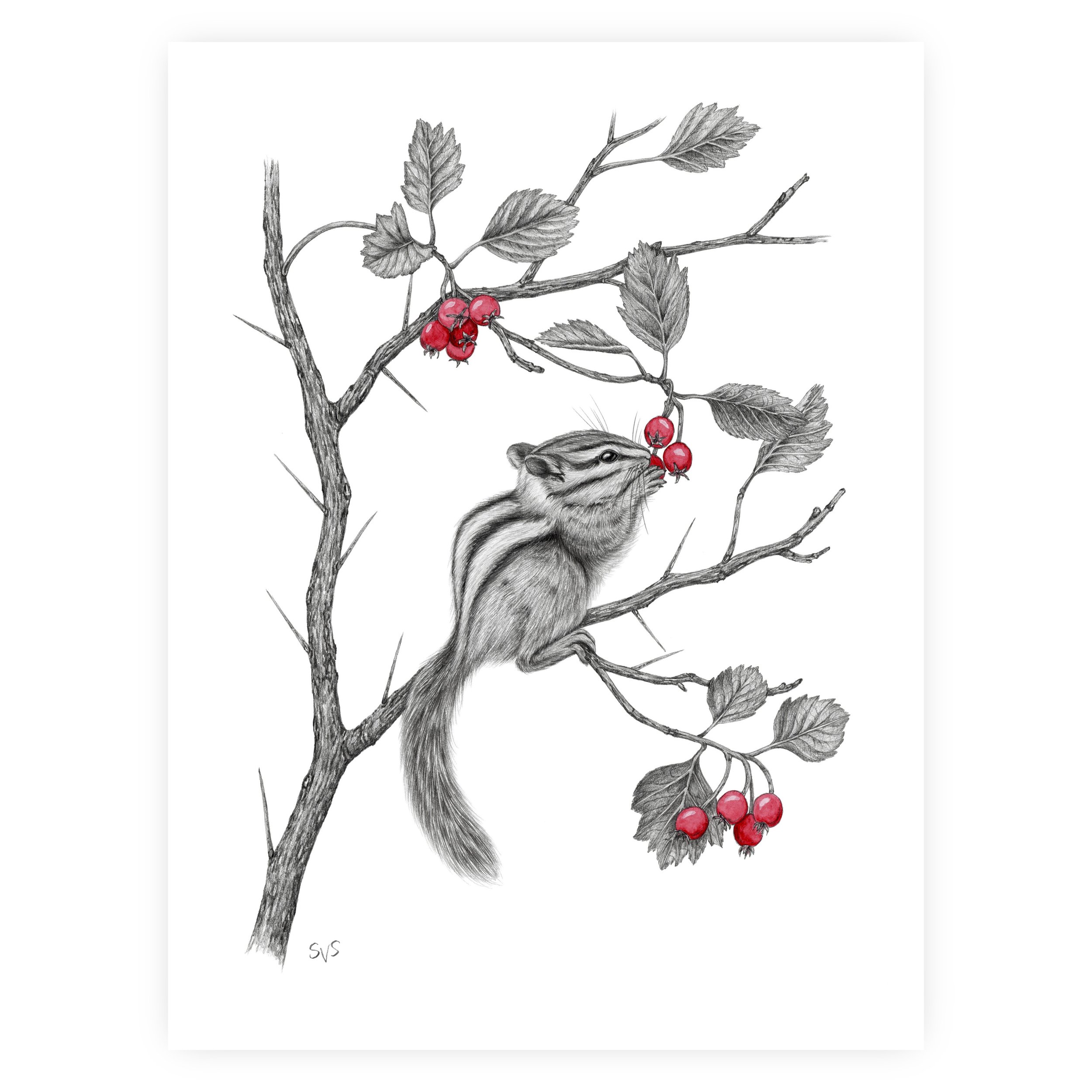
A Good Find
Least chipmunks (Neotamias minimus) are adaptable, opportunistic foragers, shifting their diets with the seasons as the landscape changes around them. During the colder months, when fresh growth has disappeared and food is harder to come by, they rely on stored provisions and whatever nourishment remains available in the environment.
Fireberry hawthorn (Crataegus chrysocarpa) is one of the plants that carries its fruit into winter. Its vivid red haws can persist well after the leaves have fallen, offering a rare source of energy during an otherwise spare season. In this piece, a single chipmunk pauses on a hawthorn branch, eating a berry still attached at the stem — a small, intimate moment of winter survival.
This illustration reflects a quiet partnership shaped by seasonality: resilience, timing, and the subtle abundance that persists even in the coldest months.
Graphite & watercolor
9” x 12”